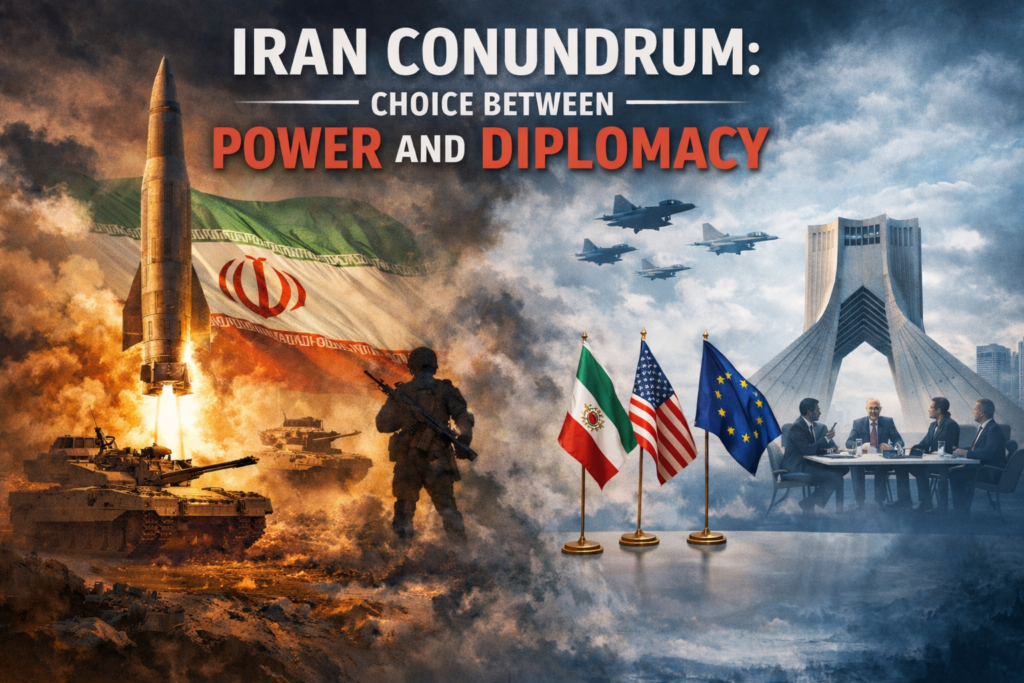
The emerging geopolitical situation in Middle East is worrisome development in the region. The tension between the United States and Iran is often described as an issue of human rights, nuclear proliferation and recalibration of Middle East. But to understand why this rivalry is so intense, we must look beyond the slogans and see the hard strategic realities. America’s focus on Iran, amidst many global troubles, is driven by a mix of resources, geography, and the desire to maintain its leading role in the world.
History sets the stage, before 1979, the Iran was a strong ally of the USA under the Shah’s regime, who protected the Western interests. The Islamic Revolution changed everything, turning a dependable partner into a determined adversary. Since then, the core of the conflict has centered primarily on two things, oil and control.
Iran is an energy giant, holding the world’s fourth-largest oil and second-largest natural gas reserves. More importantly, it sits beside the Strait of Hormuz, a narrow waterway through which about one-fifth of the world’s traded oil passes, making it the main artery for global energy. In the case of an alarming escalation, Iran can threaten to block this strait, meaning any major conflict could cause a worldwide energy crisis and economic shock.
For America, dominance has long been supported by the global use of the U.S. dollar, as a major currency, especially for buying oil and gas. This makes her financial power around the globe. Controlling the Middle East’s energy flow helps Washington influence other nations and maintains its top position. Iran, by challenging this system and spreading its influence through allies across the region, stands directly in the way of the manageable order the USA prefers.
According to an estimate by the Energy Information Administration (EIA), the Gulf producers will make up some 36 to 40 percent of total global energy liquids production by 2040, and production will rise by some 8 to 10 billion barrels a day by 2040. The USA is also cognizant of the fact that there are very limited alternatives to export oil and gas other than the strait of Hormuz. This provides a strong impetus to the Trump administration to take the reins of this strategic choke point to shape the world into her own image.
This is why the American pressure is about more than changing Iran’s government. It is about reshaping the entire regional chessboard to secure energy supplies and limit rival powers. According to Professor Chomsky, the control of energy flows enables the USA to create dependable dependents. But gambling is enormous, a war, even a limited one, could spiral out of control. Iran would likely use its asymmetric tactics-like missiles, mines, and proxies from Lebanon to Yemen—potentially closing the Strait of Hormuz and igniting fires across the Middle East. The risks are so high that even traditional U.S partner like the UAE has recently expressed concern and refused to support the Americans in any military action.
Henry Kissinger, in his book “Does America Need a Foreign Policy”, has advised American government, that the sole use of power without a clearly defined goal, is always a bad choice to achieve the strategic objectives. Pursuing a regime change without a realistic vision for what comes next, often leads to chaos and ultimately worsens the problem you are trying to solve. For the USA, this means any show of strength must be tied to smart diplomacy. The goal cannot be a total victory, but a stable balance of power that protects core interests without causing a catastrophic war. The prime minister of Pakistan, Shehbaz Sharif has recently held a telephonic conversation with the Iranian president Masoud Pezeshkian, urging a need of a sustained dialogue and diplomatic engagement. But Pakistan’s best path is one of assertive neutrality and active diplomacy. It must publicly advocate for de-escalation in every forum and privately communicate its red lines to all major and regional powers like Washington, Beijing and Riyadh. It should refuse to let its territory be used for attacks, strengthen its borders against spillover conflict and refugees, and work with states like Türkiye to make a unified regional call for restraint, highlighting the shared ruin that war would bring.
The Iranian crisis teaches a clear lesson, raw power without diplomacy is a path to regional explosion, while moral support without strategic leverage is meaningless. America must blend its considerable might with a coherent diplomatic strategy that respects the complex realities on the ground. For nations like Pakistan caught in the middle, the task is to shield themselves from the flames and urgently urge the great powers to step back from the brink. The future of the region depends on which path is chosen.