Abstract
This article argues that current tensions in the Gulf should not primarily be understood through the conventional framework of escalation towards regional war, but rather as the emergence of a sustained maritime risk regime. Unlike temporary geopolitical crises, this environment is characterised by persistent instability that is increasingly being economically absorbed into global systems of trade, shipping, insurance, and energy pricing. The article examines how maritime insecurity in and around the Strait of Hormuz and the wider Gulf region is reshaping operational behaviour across global supply chains and financial markets. It further argues that this evolving environment resembles a form of sustained grey-zone maritime competition rather than conventional interstate warfare. Particular attention is given to the implications for Pakistan and the wider Indian Ocean region, especially in relation to energy security, maritime trade resilience, Gwadar Port, and broader Blue Economy ambitions. The article concludes that maritime strategy must increasingly focus not on eliminating instability, but on managing and containing structurally embedded geopolitical risk.
Introduction
The most important shift in the Gulf is not the prospect of war. Rather, it is that global markets are increasingly beginning to treat instability itself as permanent.
Much of the contemporary debate surrounding US–Iran tensions continue to focus on whether the current situation will escalate into a broader regional conflict. While this framing remains politically and media-relevant, it is strategically limiting. It assumes a binary outcome – war or de-escalation, when neither appears immediately likely.
A more accurate interpretation of the current environment is the emergence of what may be described as a maritime risk regime: a condition in which instability is persistent, geographically concentrated, economically absorbed, and strategically managed rather than resolved.
This distinction is important because once risk becomes absorbed into systems, behaviour changes accordingly.
Historically, tensions in the Gulf were treated as temporary shocks to otherwise stable economic and geopolitical systems. Increasingly, however, shipping routes, insurance markets, energy pricing mechanisms, and investment decisions are adapting not to episodic disruption, but to the expectation of continuity. This represents a fundamentally different strategic environment.
From Disruption to Normalisation
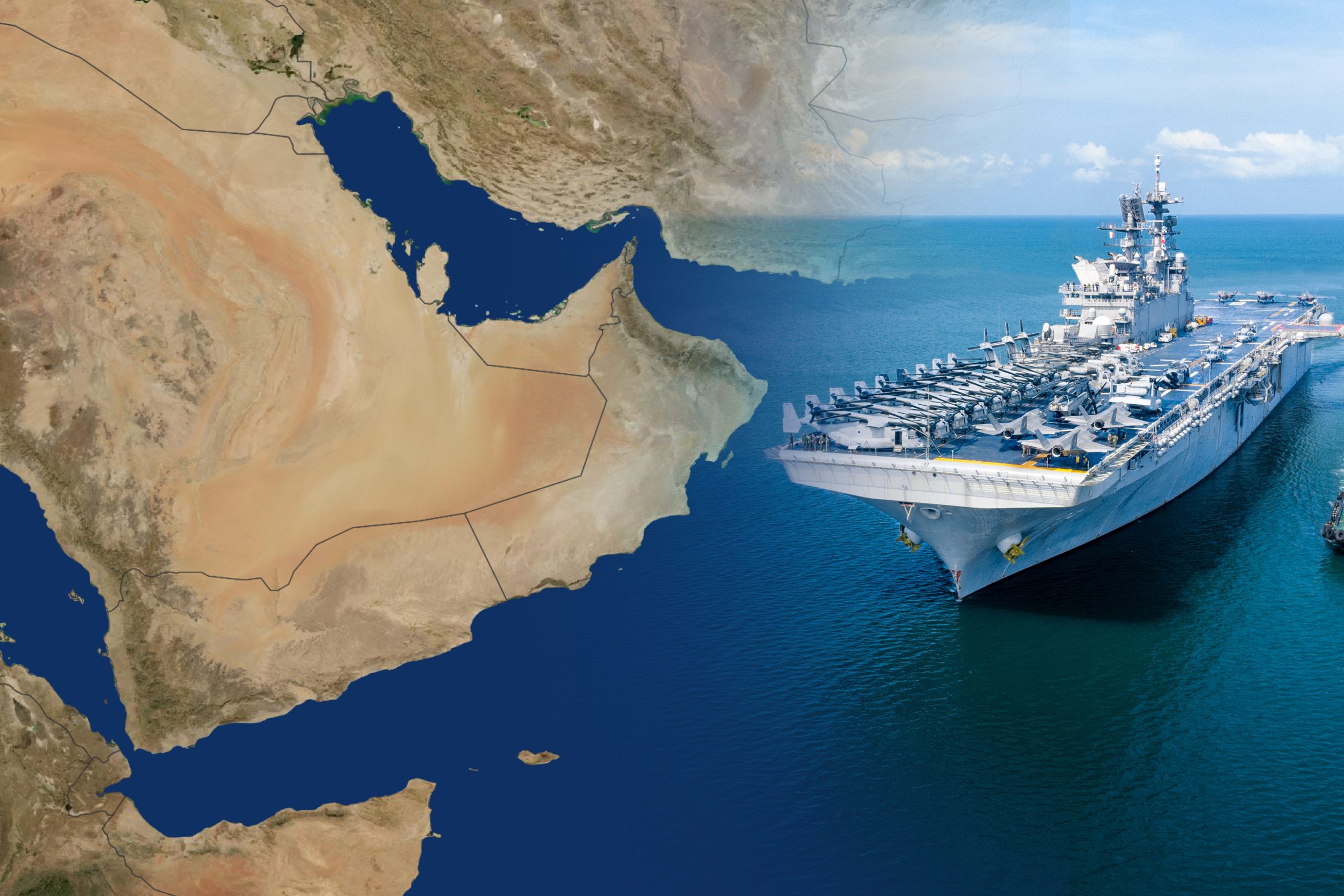
Approximately 20 per cent of global oil supply passes through the Strait of Hormuz. While this statistic is widely recognised, less attention is paid to the changing manner in which markets now respond to associated risks.
Energy prices no longer rise solely in response to disruption itself. Instead, markets increasingly move in anticipation of potential instability. A geopolitical premium—often estimated between US$5 and US$15 per barrel—has become embedded within energy pricing structures. This premium is no longer treated as exceptional, but rather as an increasingly normalised feature of global energy markets.
A similar pattern is visible across maritime operations.
War-risk insurance premiums have risen across key maritime corridors, while shipping operators are increasingly integrating contingency planning into routing decisions, fleet scheduling, and inventory management. Delays that would previously have been regarded as exceptional are now frequently incorporated into operational models.
Recent disruption in the Red Sea associated with Houthi attacks on commercial shipping provides a significant example. Numerous vessels were rerouted around the Cape of Good Hope rather than transiting through the Suez corridor, resulting in substantial increases in both transit times and operational costs. In certain cases, diversions added between 10 and 15 days to shipping schedules, producing secondary effects across freight rates, inventory cycles, and manufacturing supply chains.
Individually, these developments may appear manageable. Collectively, however, they indicate a global system adapting to persistent friction rather than temporary disruption.
Why Instability Persists
Understanding why this environment persists requires moving beyond a purely diplomatic interpretation of events.
The current situation is not simply the consequence of failed de-escalation efforts. Rather, it reflects a strategic environment in which multiple actors possess incentives to sustain instability at a manageable level.
The United States can apply strategic pressure without committing to large-scale military intervention. Israel can continue constraining Iran’s strategic operating space through calibrated actions. Iran, meanwhile, can respond indirectly through proxies, maritime signalling, cyber activity, and controlled escalation without crossing thresholds likely to provoke overwhelming retaliation.
Each actor is therefore managing risk rather than resolving it.
In many respects, this environment resembles a form of sustained grey-zone maritime competition rather than conventional interstate warfare.
From a maritime perspective, this distinction is critical. Much of Iran’s signalling is not conventionally territorial, but maritime-adjacent—linked to chokepoints, shipping lanes, offshore infrastructure, and proximity to strategically significant trade routes.
Consequently, the maritime domain is not incidental to the conflict. It is central to how the conflict itself is conducted.
The Economic Transmission Mechanism
The implications of this maritime risk regime extend significantly beyond the Gulf region itself.
First, there are direct implications for energy markets. Even relatively modest increases in oil prices contribute to inflationary pressures, particularly within energy-importing economies. This subsequently shapes monetary policy decisions, fiscal planning, interest rate trajectories, and broader patterns of economic growth.
Second, there are implications for global supply chains. Increased transit times, higher insurance costs, and uncertainty surrounding maritime routing introduce inefficiencies into international trade systems. Businesses are increasingly required to balance efficiency against resilience, often accepting structurally higher operating costs in order to mitigate geopolitical exposure.
Third, persistent instability affects patterns of capital allocation and investor behaviour. Risk premiums rise, capital becomes more selective, and emerging markets experience heightened volatility.
Over time, these effects accumulate. The International Monetary Fund has repeatedly warned that geopolitical fragmentation and sustained instability may materially reduce long-term global economic output. While precise estimates vary, the broader principle is increasingly difficult to dispute persistent instability imposes structural economic costs.
Implications for Pakistan and the Wider Indian Ocean Region
For Pakistan, these developments possess strategic significance.
Pakistan occupies a geographically important position at the intersection of critical Indian Ocean trade routes and wider Gulf energy flows. Sustained instability within the Strait of Hormuz and adjacent maritime corridors therefore carries direct implications for Pakistan’s energy security, maritime trade exposure, import costs, and broader economic resilience.
This is especially significant in the context of Pakistan’s long-term Blue Economy ambitions and the strategic development of Gwadar Port within the framework of the China–Pakistan Economic Corridor (CPEC).
Gwadar’s importance is often discussed primarily in terms of connectivity and regional trade potential. However, its strategic relevance is equally shaped by the wider security environment of the Arabian Sea and the northern Indian Ocean. Maritime instability within the Gulf region inevitably influences the operational and commercial conditions within which Pakistan’s maritime ambitions must develop.
Accordingly, maritime security can no longer be understood solely through a traditional naval or defence-oriented lens. Increasingly, it must be approached as an integrated economic and strategic issue encompassing energy security, shipping resilience, port infrastructure, supply chain continuity, and regional maritime governance.
In this respect, maritime strategy is becoming inseparable from economic strategy.
Implications for Maritime Strategy
If the current environment represents not a temporary disruption but a sustained condition, then strategic responses must evolve accordingly.
For maritime operators, this requires moving beyond reactive risk management towards integrated strategic planning. Such measures include:
- Modelling sustained exposure to chokepoint disruption
- Building redundancy into routing and logistics systems
- Embedding geopolitical analysis into operational decision-making; and
- Strengthening supply chain resilience and inventory flexibility
For policymakers, the emphasis similarly shifts from resolution towards containment. Key priorities include:
- Maintaining freedom of navigation
- Reducing the likelihood of strategic miscalculation
- Preserving communication channels between adversaries; and
- Protecting critical maritime infrastructure and trade corridors.
The objective is therefore no longer the complete elimination of risk but rather preventing instability from escalating beyond manageable thresholds.
A Different Kind of Conflict
This is not a conventional war characterised by clearly defined fronts, timelines, or end states.
Nor is it a frozen conflict. It remains active, adaptive, and economically consequential.
What distinguishes this form of competition is that it operates primarily through systems rather than events—through pricing structures, maritime routing, signalling behaviour, insurance mechanisms, logistics, and patterns of economic adaptation.
That is what makes it strategically significant.
Conclusion
The most important development in the Gulf is not escalation itself, but adaptation.
Markets have adjusted. Shipping systems have adjusted. Policy frameworks are beginning to adjust.
The principal danger is not necessarily that the current environment develops into a prolonged conventional war. Rather, it is that instability gradually evolves into a normalised and enduring condition embedded within the global economic system itself.
For maritime strategy, this represents a profound shift.
Once risk becomes structurally priced into systems, it ceases to be temporary.
It becomes part of the system.