
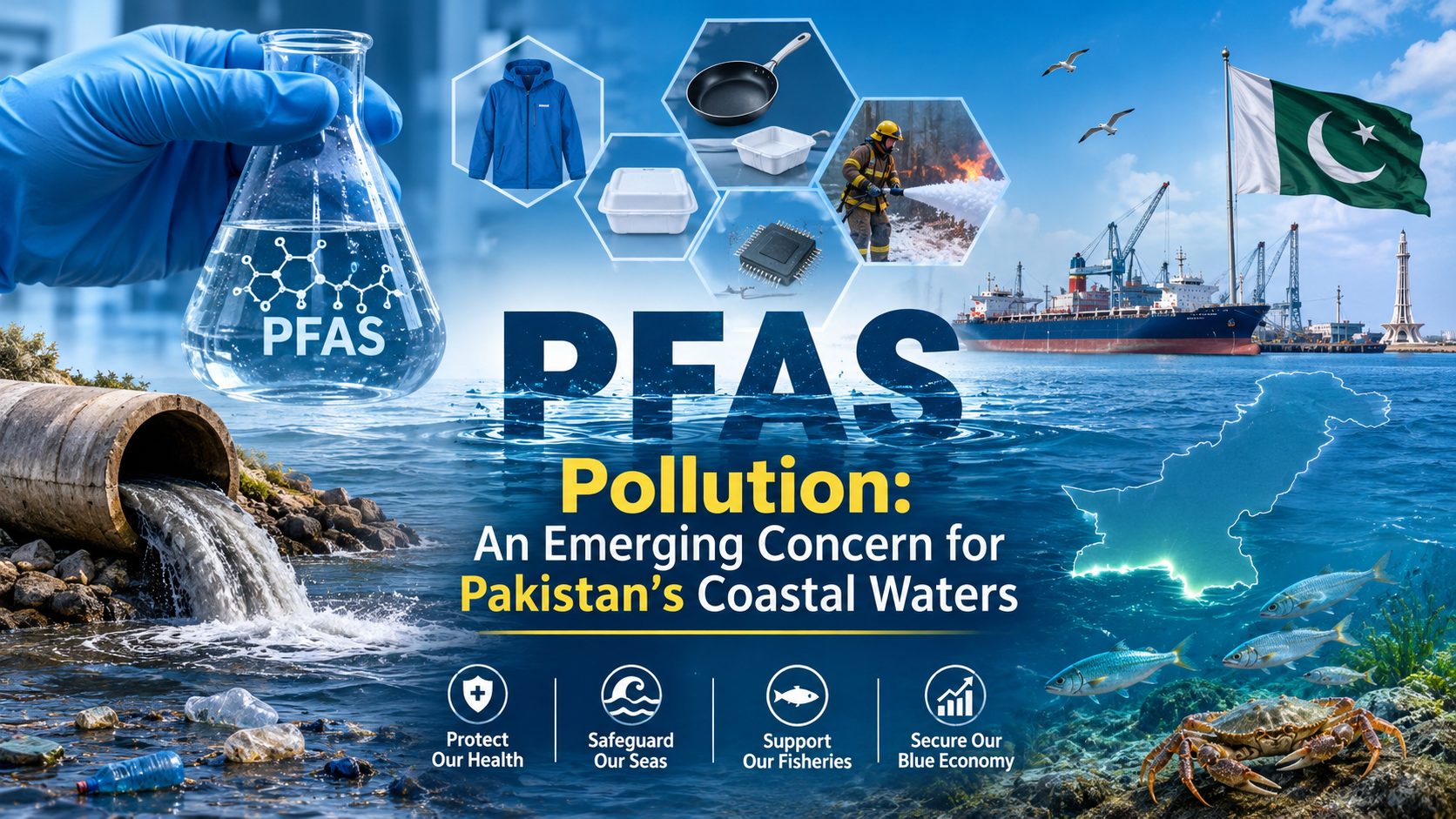
Per- and polyfluoroalkyl substances (PFAS), commonly called “forever chemicals,” are a large group of synthetic chemicals. They are used in different products because they can resist water, oil, heat and stains. That is why they appear in many everyday products, including waterproof clothing, industrial coatings, firefighting foams, food packaging, non-stick cookware and electronics. Some well-known PFAS, including PFOS and PFOA are also treated internationally as persistent organic pollutants and bound into global chemical regulations.
Their strength is also their weakness. PFAS are made to resist breakdown, so after a product is used, these chemicals can remain in wastewater, soil, landfill waste and industrial discharges for long periods. From there, they can move into rivers, groundwater and eventually the sea. Once in the marine environment, PFAS can remain in seawater, settle into sediments or enter fish and shellfish ultimately creating serious concern for coastal communities, fisheries and seafood safety. Long-term exposure to certain PFAS has also been linked with effects on the liver, immune system, cholesterol levels, reproduction and some cancers.
Globally, PFAS research has moved far ahead. Extensive research has been carried out globally. The United States, Europe, China, Canada and Australia has many research groups investigating the presence and potential impacts of PFAS in drinking water, food, air, soil, wildlife and human populations. Scientists are also studying newer PFAS, where they come from, how they move through the environment and how they can be removed or destroyed. Europe began systematic PFAS monitoring in drinking water in 2026. The issue is therefore moving rapidly from scientific research into environmental policy.
Developing countries are also building evidence. India now has studies PFAS toxicity covering rivers, groundwater, sediments, wastewater, fish and industrial areas. Bangladesh has also developed coastal seafood data of PFAS. South Africa has developed inventory of PFAS at 48-sites in eight-province on water. Vietnam has also developed baseline information covering water, sediments and aquatic organisms.
For Pakistan, the issue has a clear maritime side. Pollution released on land often ends its journey in the Arabian Sea. Wastewater, industrial discharge, landfill leachate and chemicals used around ports can all reach coastal waters. Firefighting foams are especially relevant because they have historically contained PFAS and are used at oil facilities, ports and other high-risk sites.
Pakistan is not starting from zero. Some researchers have reported PFAS in important freshwater reservoirs in Punjab. Other studies have examined agricultural soils around brick kilns and informal e-waste recycling sites.
Pakistan still has no coordinated national PFAS baseline. There are no studies on contamination of PFAS in the Arabian Sea, coastal sediments, commercially important fish and shellfish, port areas, wastewater outfalls and landfill leakage reaching the coast. We also have limited information on which industries and imported products may be major sources.
There is also a research-capacity challenge. PFAS are difficult and expensive to measure because they often occur at very low concentrations. Laboratories need sensitive instruments, trained staff, clean sampling procedures and strong quality control. Advanced research also requires methods that can detect unknown PFAS, rather than testing only a short list of familiar chemicals. Pakistan therefore needs investment in analytical capacity as much as it needs new research projects.
A practical response should begin with a focused national study. The Ministry of Climate Change and Environmental Coordination, Ministry of Maritime Affairs, Pak-EPA, provincial EPAs, the National Institute of Oceanography, NIMA, universities, fisheries agencies and port authorities can work together. The first task should be simple: find out where PFAS are present and where they are coming from.
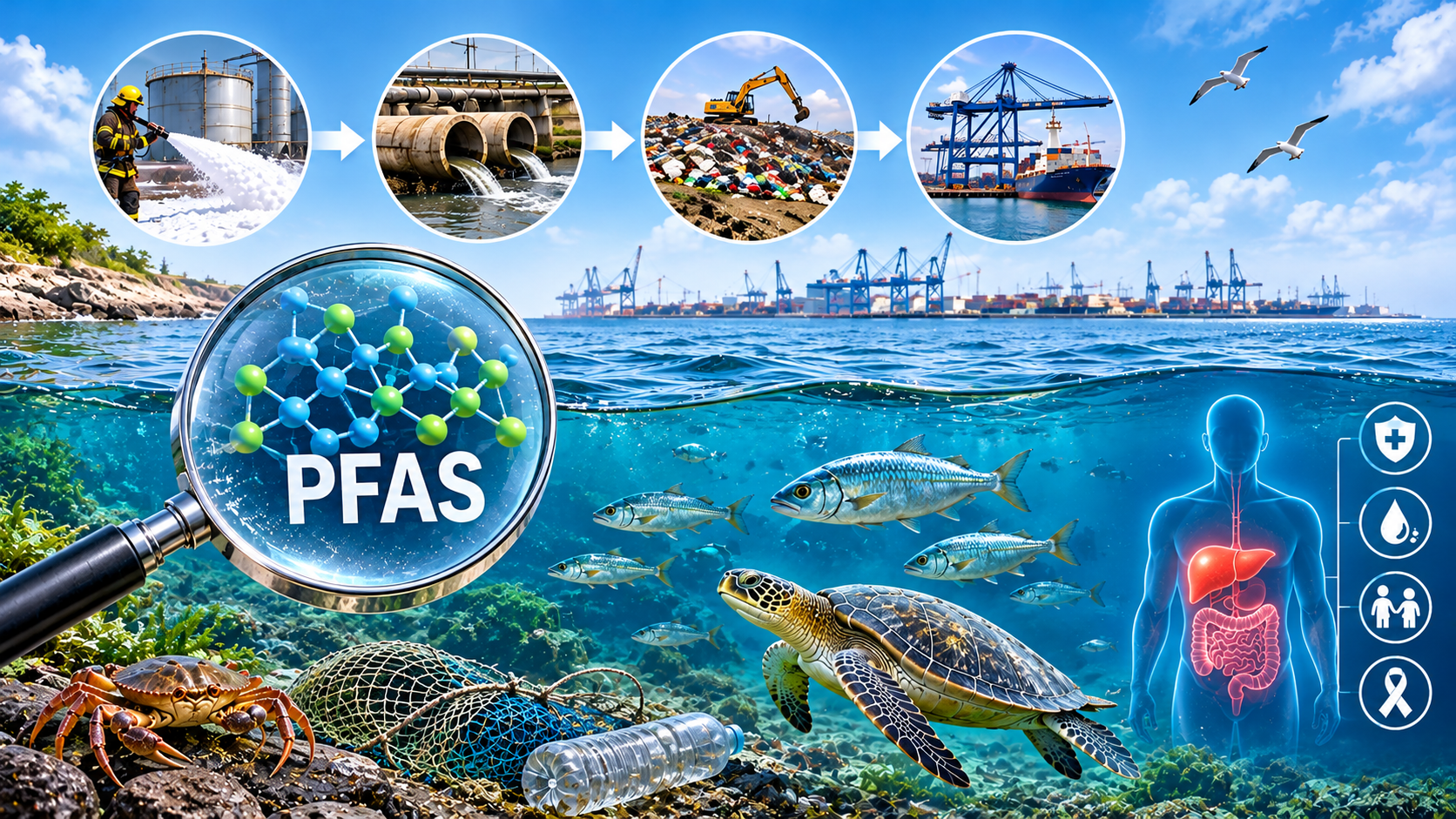
From a maritime perspective, Karachi’s coastal outfalls and harbour areas, Port Qasim, the Indus Delta, Gwadar and selected fish-harbour and aquaculture zones would be sensible starting points. Samples should include wastewater, seawater, sediments and seafood. Ports and petroleum facilities should also review the firefighting foams they use and how old stocks are stored and disposed-of.
Pakistan does not need to regulate blindly. It first needs evidence. A national PFAS baseline and hotspot map would show where action is most urgent. Once major sources are known, authorities can focus on cleaner alternatives, better waste management, safer firefighting practices and stronger control of industrial discharges.
PFAS may still sound unfamiliar to most Pakistanis, but the issue will not remain unfamiliar for long. Around the world, “forever chemicals” have moved from a specialist research topic to a public-health and environmental policy concern. For Pakistan, the Arabian Sea should be part of that discussion from the beginning. Protecting our coast, fisheries and blue economy requires us to understand not only the pollution we can see, but also the chemicals we cannot.