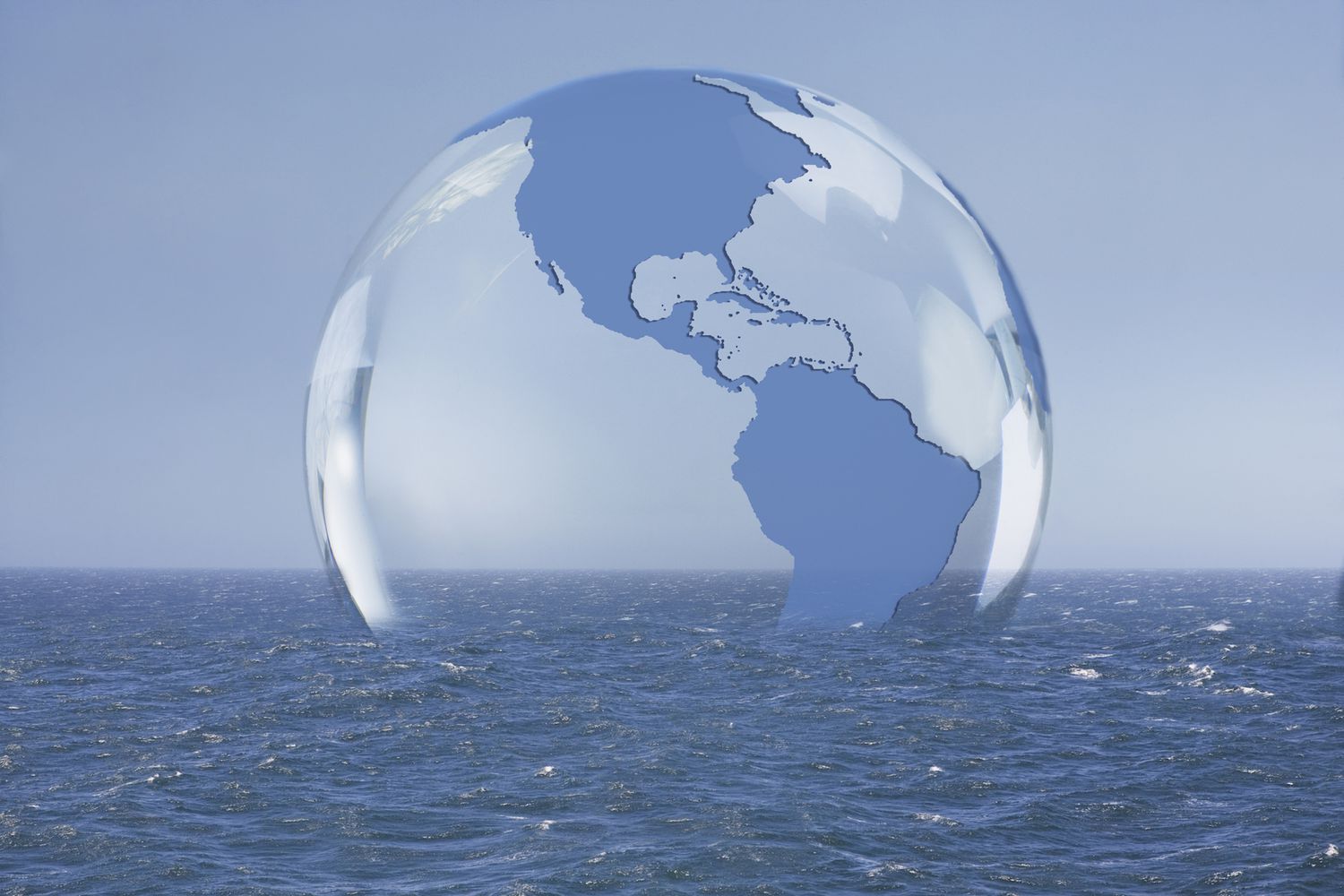
Water is the utmost blessing from the Creator for living beings. Hence, humans contest water resources for their diverse uses. Whether for personal use or for commercial, navigation or transportation, every drop of water is precious, even though three-fourths of the Earth is covered by water. Human civilisations have endeavoured to establish themselves near water resources, including rivers, lakes, and seashores.
Historically, the Egyptians made the most of the Nile River for trade; however, the Cretans are regarded as the first oceanic traders. “The Phoenicians inherited maritime supremacy in the Mediterranean around 1200 B.C. after earthquakes and political instability destroyed the Cretan civilisations.”
Hence, it was unsurprising that seafaring nations were able to colonise territories that lacked the knowledge and infrastructure to utilise their water resources. Admiral Alfred Mahan’s dictum that whosoever controls the sea will control the world was practised in true letter and spirit.
Fast-forward to modern times, nothing has changed regarding this most precious commodity that God created for living beings to consume with caution and use with care. However, the human tendency toward self-interest prevents states from voluntarily sharing water resources; only through Rules, Regulations, and Treaties are such resources shared with others. Yet, in the presence of formal Agreements that states attempt to deprive nature’s most important commodity from others and often use it as a war instrument.
Yet a few nations have not made the best use of this immensely blessed commodity by the Creator. It pains me write that, unfortunately, Pakistan is one of those. In less than 70 years, Pakistan has transformed from a water-surplus country to a water-scarce one.
Pakistan is blessed with multiple water sources, including precipitation (Rain/Snow), surface water, subsurface/aquifers, and seawater. The mighty Indus River is primarily sourced from glaciers (65-75 per cent) within Pakistan, whereas the Jhelum and Chenab Rivers depend on glaciers in IIOJK/India. Despite the threat of climate change, the country still receives sufficient rainfall, which contributes to about 20-25 per cent of the total available water. However, Pakistan’s inability to store any meaningful water from the Monsoon system is rapidly making it a water-scarce country.
However, ignoring the shores of the Arabian Sea is perhaps the most egregious form of negligence on our part. Pakistan is blessed with a vast warm-water coastline, which could have been the world’s paradise for beach lovers and a substantial tourism economy.
Admiral Alfred Mahan’s dictum that whosoever controls the sea will control the world was practised in true letter and spirit.
The underwater world, according to the Holy Book of the Quran, contains multiple hidden treasures that the Creator has allowed humans to explore. In my opinion, it is never too late. Let maritime experts take charge and craft a medium- to long-term policy on water resources and the optimal utilisation of our warm-water coastline. There is little doubt that the Arabian Sea is blessed with numerous natural resources; however, a strong political will is needed to convert them to more meaningful commodities. Let us make use of the rhetorical phrases such as “maritime economy” or “blue economy” a reality. In my opinion, this may be a better shortcut to Pakistan’s future than subletting mineral resources to those who will never be your friends.
Declare a maritime emergency, create ‘Underwater Domain Awareness’ (UDA), and invite investments with incentives to develop tourist resorts along our long coastline. Revive both the ‘Ship Building and Ship Breaking’ industries. Move aggressively into Oil and Gas Exploration on our Continental Shelves, while not forgetting to develop infrastructure to benefit from the multi-billion-dollar seafood industry, which is non-existent elsewhere. Pakistan is endowed with numerous maritime resources. All we need to do is extract, refine, and export them.
At the risk of repetition, I urge the Government of Pakistan to avoid the constraints of domestic politics and allow maritime experts to craft a feasible strategy that could prove transformative in the medium to long term. However, it must start now, without delay, because the water courses, be it lakes, rivers, or oceans, are going to be increasingly contested as the water becomes scarce due to the impact of climate change. Moreover, the evolving international system will once again, like in the colonial era, make the seafarers more dominant.
Mahan is being reinvented across all water resources, not only the oceans. If Pakistan is to remain relevant, its leadership must understand that investment in and the importance of maritime assets and infrastructure are not luxuries but stark necessities.
Perhaps this is our last opportunity to implement an aggressive maritime strategy across multiple fronts: seafood, hydrocarbons, shipbuilding, shipbreaking, tourist resorts, and ferry services. It should be noted that all these assets would need to be secured; hence, the Pakistan Navy must be accorded due importance in its development plans.
Note that the security of our sea lanes of communication cannot be outsourced.
The writer of this article has authored four international books: Nuclear Deterrence and Conflict Management Between India and Pakistan, South Asia Needs Hybrid Peace, Understanding Sun Tzu and the Art of Hybrid War, and Diplomacy and Deterrence.”