
Preamble
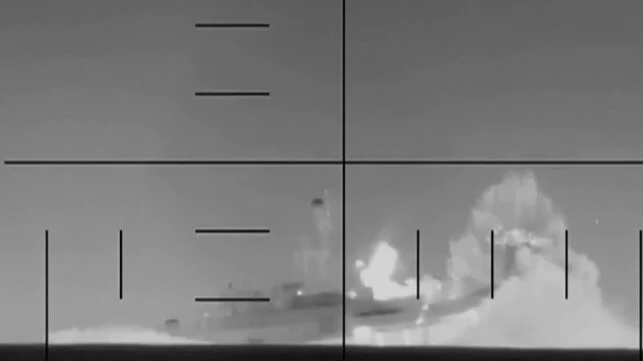
The gray waters off Galle, Sri Lanka, have become an underwater graveyard for 87 Iranian sailors and a haunting memorial to a tragedy that should never have occurred. On March 4, 2026, the Iranian frigate IRIS DENA was ripped apart by a U.S. Nuclear Submarine’s torpedo just 19 nautical miles from Sri Lanka’s Southern coast. The IRIS DENA had just taken part in India’s MILAN 2026 naval exercise; a grand event where New Delhi proudly presented itself as the Indian Ocean’s Net Security Provider with a promise to protect all who sail in its waters. Now, as the world dissects the legality of the American strike and debates the morality of leaving survivors choking on saltwater, one uncomfortable truth lingers over the waves of Indian Ocean. New Delhi has not failed a friend, it has revealed the hollowness of its own promises, transforming diplomatic negligence into an unforgivable betrayal written in the depths of the sea.
India’s deepening strategic defense partnership with the United States, anchored in agreements like Communications Compatibility and Security Agreement (COMCASA) for secure communications and Logistics Exchange Memorandum of Agreement (LEMOA) for logistics support, has fostered an unprecedented level of intelligence sharing and military interoperability between the two nations. The level of the partnership, designed to create shared maritime domain awareness, would logically have tracked IRIS DENA’s journey. This raises the uncomfortable possibility that India’s intelligence apparatus was either complicit through active sharing or responsible through willful neglect.
THE FACADE OF LEGALITY
To understand whether this strike was unlawful murder or justified warfare, one must peer through two distinct legal lenses: United Nations Convention on the Law of the Sea (UNCLOS), which governs the geography of the crime scene, and the Law of Armed Conflict, which judges the act of killing itself. The UNCLOS primarily governs peacetime activities and defines maritime zones. Its role in this incident is to establish where the attack happened and to determine jurisdiction. More relevant is here is Laws of Armed conflict (LOAC), that take precedence over UNCLOS. LOAC, also known as international humanitarian law, regulates the conduct of hostilities. This is the primary framework for evaluating the attack. Under LOAC, enemy warships are generally considered legitimate military objectives by nature. However, IRIS DENA was navigating in international waters, more than 2,000 nautical miles from the war zone, the U.S. strike was utterly unwarranted. There was no tactical necessity, no immediate threat, and no justification for such violence against a vessel engaged in peaceful passage.
BREACH OF ETHICAL STANDARDS
Setting aside the legal complexities, the sinking of the IRIS DENA constitutes a profound moral failure and breach of ethical standards by New Delhi. This incident does not merely reflect a tactical strike by a third party; in fact, it is an ethical rupture that goes beyond strategic embarrassment. As one former Indian diplomat observed, the Iranian ship was in our waters “because of India’s invitation,” placing New Delhi’s obligation on a “moral and human plane”. Yet, by maintaining its silence after the sinking, India has turned away from the implicit duty it owed to a guest who answered its call. What could have been a distant misfortune now stands as undeniable evidence of India’s reluctance to support those who sail under its banner.
BETRAYAL OF NAVAL GOODWILL
The sinking of the IRIS DENA also represents a fundamental betrayal of the unwritten codes that govern naval camaraderie, naval diplomacy and goodwill. When Iranian Navy dispatched one of its warships to India’s MILAN exercise, a sacred trust was established; a trust rooted in the time-honored traditions of the sea, where a guest is afforded protection. For the Iranian navy, and for every other navy that watched the IRIS DENA sail to her doom, the message is unmistakable: The codes of naval brotherhood, painstakingly built through years of exercises and exchanges, can be rendered hollow in an instant. it is a stain on India’s naval honor, warning the global maritime community that to sail alongside India is to do so at one’s own peril.
CONCLUSION
The sinking of the IRIS Dena stands as more than a wartime casualty; it is a testimony to the fragility of naval goodwill, moral values by India and Indian Navy. Legally, while the United States may find justification for its strike under the Law of Armed Conflict, the circumstances surrounding the attack cannot be separated from the obligations of host nation responsibility. New Delhi has not merely disappointed an ally; it has signaled to every navy that its assurances extend only as far as its strategic interests permit. In the brotherhood of the seas, where trust is the only currency, this message is devastating. India can stab in the back when convenience demands it, effectively stripping its moral commitments of all credibility.