The ongoing conflict in the Middle East has thrust the maritime domain into the spotlight, transforming the Strait of Hormuz into the epicenter of global economic crisis. The developing situation in the region is not merely a distant geopolitical event but carries direct and profound implications for Pakistan’s economy and military calculus. The recent turbulence in the Middle East, coupled with the strategic execution of Operations Muhafiz ul Bahr (Guardian of the Sea), has crystallized a core narrative that Maritime security is not wartime indulgence, it is a peacetime necessity that sustains national survival.
Today Sea Lines of Communication (SLOCs) are not abstract military terms; they are Pakistan’s lifelines. Over 90% of Pakistan’s trade moves via the sea. More critically, the nation’s energy security is anchored in the maritime domain. Pakistan relies heavily on imported oil and gas to fuel its industries, power its cities, and sustain its transportation networks. If the trade and energy supplies are disrupted, the economy does not merely slow down, it seizes. Therefore, a strong Navy is not an instrument of war; it is the guarantor of economic continuity. A frigate patrolling the Arabian Sea is not just a deterrent against an adversary; it is a safeguard ensuring that oil tankers dock in time, that food imports reach ports, and that the wheels of industry continue to turn. The most critical naval operations, therefore, are often the ones that ensure nothing goes wrong.
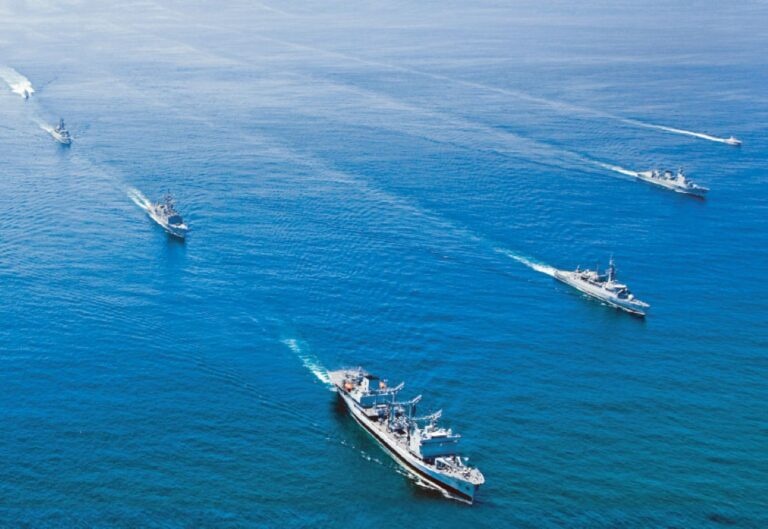
PN Ops Muhafiz ul Bahr represents this peacetime philosophy. It is not a reaction to a singular threat but a sustained commitment to safeguarding Pakistan’s maritime zones. The operation is dedicated to ensuring maritime security, keeping the waters safe for uninterrupted commercial activity. In the current volatile environment, the Pakistan Navy’s role as the guarantor of energy security has never been more critical. The ports of Karachi, Port Qasim, are the vital arteries of the national economy. Millions of livelihoods depend on the uninterrupted flow of goods and energy supplies through these ports. Any disruption at sea, whether from regional conflict, or hostile actors would send shockwaves through Pakistan’s energy sector, triggering inflation and industrial paralysis. By maintaining a constant vigil across the Arabian Sea, the Pakistan Navy ensures that the fuel powering factories, transportation networks, and households reaches its destination without hindrance. In doing so, Muhafiz ul Bahr transforms naval power from a traditional military function into a direct enabler of economic resilience and national prosperity.
The ongoing conflict in the Middle East serves as a stark reminder that geography is destiny. Pakistan sits at the mouth of the Persian Gulf, a neighbor to the world’s largest energy reserves. The Strait of Hormuz, through which nearly a fifth of global oil consumption passes, lies just outside Pakistan’s western maritime boundary. Instability there translates instantly to volatility here. For Pakistan, energy security begins at sea. Without a capable, vigilant, and proactive navy, the nation would be held hostage to the whims of regional conflicts and extra-regional powers seeking to exert influence through maritime choke points.
Maritime security is imperative not only in war but equally critical during peacetime. In war, the objectives are clear: deterrence and defense. In peacetime, the mission is far more complex: ensuring the stability that allows a nation to grow. The Pakistan Navy’s role in the evolving security paradigm of the Middle East is a testament to this understanding. By deploying assets, conducting regular patrols, and engaging in cooperative security frameworks with regional allies, Pakistan has positioned itself not as a passive observer, but as a responsible maritime steward.
As the nation looks to the future, with the expansion of the China-Pakistan Economic Corridor (CPEC) and the increasing strategic importance of Gwadar, the margin for error at sea shrinks to zero. The lessons from the Middle East war are clear: when land routes are disrupted, sea routes become the final bastion of economic resilience.
The Pakistan Navy, through operations like Muhafiz ul Bahr and its unwavering vigilance during Marka-e-Haq, has demonstrated that it is not merely a defensive force for wartime. It is the custodian of the nation’s economic sovereignty. In a world of perpetual uncertainty, the Navy ensures that while wars may come and go, the lifelines of Pakistan remain unbroken. Security at sea is not just about naval dominance; it is about ensuring that the nation breathes, moves, and prospers, every single day.